

Blog / POSH Training in Mumbai
POSH Training for Companies in Mumbai: Avoid Costly Compliance Risks
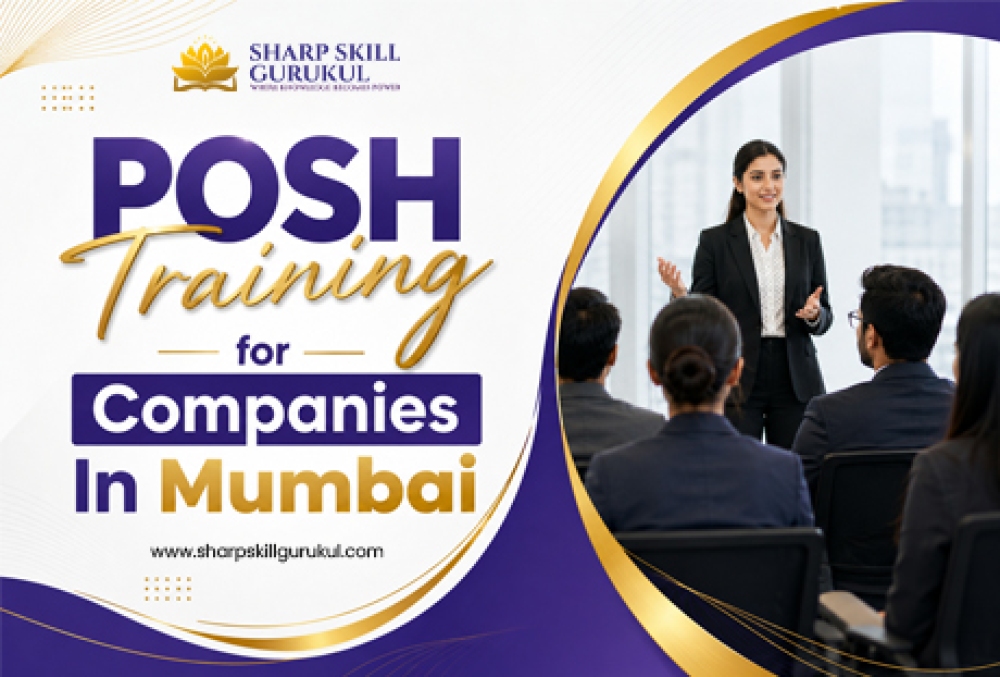
Workplace safety is not only an HR responsibility. It is a core part of responsible business management. For organisations operating in a busy and diverse city like Mumbai, clear workplace conduct standards are especially important. POSH training for companies in Mumbai helps employees understand sexual harassment, reporting procedures, workplace boundaries, and the role of the Internal Committee (IC).
The Sexual Harassment of Women at Workplace Act, 2013 requires employers to provide a safe working environment and organise workshops and awareness programmes at regular intervals. It also requires orientation programmes for Internal Committee members.
Why POSH Compliance Matters for Mumbai Businesses
Mumbai brings together corporate offices, financial institutions, hospitals, manufacturing units, educational organisations, retailers, hospitality businesses, and startups. Each environment has different workplace dynamics.
Employees may work from offices, client locations, homes, shared spaces, company vehicles, or business events. Digital communication adds another layer. Messages, video calls, emails, and social platforms can create situations that employees may not immediately recognise as inappropriate.
Therefore, POSH training for companies in Mumbai should go beyond reading legal definitions. Employees need practical guidance that helps them recognise unacceptable conduct and understand what to do when concerns arise.
What Does the POSH Act Require?
The law places several responsibilities on employers. These include maintaining a safe working environment, displaying information about sexual harassment and the Internal Committee, supporting the committee during inquiries, and organising awareness and orientation programmes.
For workplaces covered by the Act, an Internal Committee must also be constituted according to the prescribed requirements. The committee includes a woman Presiding Officer, employee members, and an external member, subject to the statutory conditions.
Compliance, therefore, is not simply about conducting one workshop and storing a certificate.
What Should Effective POSH Training Cover?
A useful programme should be relevant to the people attending it. Different groups have different responsibilities.
Employee Awareness Training
Employees should understand what sexual harassment can look like in real situations. Training can cover verbal, physical, visual, and digital conduct, along with examples that clarify professional boundaries.
Participants should also learn how complaints can be raised and where they can seek help.
The objective is not to create fear. It is to create clarity.
Manager and Leadership Sensitisation
Managers often receive concerns before a formal complaint is made. They need to know how to respond appropriately without dismissing the concern or attempting to investigate it themselves.
Leadership sessions can address professional boundaries, workplace behaviour, unconscious bias, confidentiality, and responsible escalation.
Internal Committee Training
IC members have a more demanding role. Their training should cover complaint handling, inquiry procedures, documentation, natural justice, confidentiality, timelines, and objective decision-making.
The Act also places duties on employers to provide necessary facilities to the committee and assist with the inquiry process.
How Training Helps Prevent Compliance Risks
The strongest benefit of POSH training for companies in Mumbai is practical preparedness.
Employees know what behaviour is inappropriate. Managers understand how to respond. IC members become more familiar with their responsibilities. HR teams can also identify gaps in policies and internal processes.
Furthermore, regular training can help organisations build a workplace where concerns are addressed before misunderstandings become larger problems.
Better Documentation
Training should leave an appropriate administrative trail. Organisations can maintain attendance records, session details, training materials, and other relevant compliance documentation.
This becomes particularly useful when HR teams need to demonstrate that awareness initiatives have been conducted.
Stronger Internal Processes
Training can reveal weaknesses that may otherwise remain unnoticed. For example, employees may not know whom to approach, managers may be unclear about escalation, or an IC may lack confidence in handling procedural requirements.
Addressing these gaps early is more practical than attempting to fix them during a sensitive complaint.

Choosing the Right POSH Programme
Not every workplace needs an identical session. A manufacturing company may face different challenges from a technology company with a largely remote workforce.
A good programme should consider:
- Workforce size and structure
- Industry-specific workplace situations
- Office and remote-working arrangements
- Digital communication practices
- Existing POSH policy
- Internal Committee composition
- Employee language and familiarity with legal terminology
- Documentation and reporting processes
When evaluating a POSH trainer in Mumbai, organisations should consider subject knowledge, practical experience, training methodology, and the ability to adapt examples to the workplace.
Online or Offline Training?
Both formats can work when designed properly.
Offline workshops can encourage direct discussion and group participation. They may be useful for larger office teams or organisations seeking an interactive session.
Online programmes offer flexibility for distributed teams. They can also make it easier to train employees working across different locations.
The right choice depends on the organisation's workforce and objectives rather than simply selecting the more convenient format.
Common Mistakes Companies Should Avoid
Some organisations treat POSH compliance as a checkbox exercise. This can reduce training to a short presentation with little practical value.
Another mistake is training employees while overlooking the IC. Committee members require more detailed knowledge because they may be responsible for handling formal complaints.
A third issue is relying entirely on generic examples. Workplace situations can vary significantly across sectors.
Consequently, POSH training for companies in Mumbai should connect legal principles with realistic workplace scenarios.
Organisations should also avoid promising absolute confidentiality in situations where legal or procedural obligations require information to be shared with authorised parties. The Act restricts publication or disclosure of complaint and inquiry information, protecting the privacy of the individuals involved.
What Makes POSH Training More Effective?
Effective POSH training in Mumbai should encourage participation rather than passive listening.
Scenario-based discussions can help participants understand difficult situations. Short case studies can show how apparently minor conduct may affect workplace comfort and professionalism.
For IC members, mock inquiry exercises can make procedural concepts easier to understand. Question-and-answer sessions can also address uncertainties that employees may hesitate to raise individually.
Most importantly, training should explain both rights and responsibilities.
Building a Safer Workplace Culture
Compliance and culture are closely connected, but they are not identical. A company may have a policy on paper and still have employees who do not know how it works.
A stronger approach combines policy, awareness, accessible reporting channels, trained committee members, appropriate documentation, and responsible leadership.
This is where POSH training for companies in Mumbai can become more than a legal formality. It can help organisations establish clearer expectations and encourage respectful professional relationships.
For organisations operating across Mumbai's corporate, healthcare, education, manufacturing, retail, and hospitality sectors, context matters. Training should reflect actual workplace conditions, including client interactions, hybrid work, business travel, late shifts, and third-party contact.
A Practical POSH Compliance Checklist
Before arranging a programme, HR and leadership teams can review the following:
- Confirm whether the workplace falls within the applicable POSH framework.
- Review the current POSH policy.
- Check that the Internal Committee has been constituted appropriately.
- Verify that IC members understand their statutory responsibilities.
- Schedule employee awareness sessions at appropriate intervals.
- Provide separate, role-specific orientation for IC members.
- Maintain suitable training and attendance records.
- Review reporting and complaint-handling procedures.
- Keep sensitive complaint information appropriately protected.
- Reassess training needs when the workforce, workplace model, or policies change.

Build a Safer Workplace with Expert POSH Training
Sharp Skill Gurukul delivers practical POSH training in Mumbai through focused employee awareness and Internal Committee (IC) programmes. Offline sessions cost ₹25,000 for 2 hours, while online training is ₹12,500 for 1 hour 15 minutes, with EMI available for offline programmes. Designed for groups of 15–25 participants, the training covers harassment awareness, IC procedures, policy review, annual reporting, and inquiry support. Suitable for corporates, hospitals, NGOs, educational institutions, and MSMEs, it combines legal awareness with practical workplace guidance.
Make Compliance Part of Everyday Workplace Practice
A well-designed programme gives employees practical knowledge they can use. It helps managers respond more responsibly and prepares IC members for their specific duties.
For businesses seeking POSH training for companies in Mumbai, the priority should be quality, relevance, legal awareness, and practical application rather than simply obtaining a participation certificate.
In conclusion, POSH compliance works best when awareness is continuous, and responsibilities are clearly understood. Organisations that invest in informed employees, capable committees, sound policies, and responsible leadership are better positioned to create respectful workplaces while reducing avoidable compliance risks.
For tailored awareness sessions, IC training, policy support, and practical workplace learning, organisations can explore programmes from Sharp Skill Gurukul and choose a format suited to their workforce.
FAQs
1. Why is POSH training important for companies in Mumbai?
POSH training helps employees recognise inappropriate conduct, understand reporting procedures, and support a respectful workplace. It also helps organisations meet applicable legal responsibilities and strengthen their internal compliance processes.
2. What does a comprehensive POSH training programme include?
A comprehensive programme can include employee awareness, leadership sensitisation, Internal Committee training, complaint-handling procedures, documentation guidance, policy review, and practical workplace scenarios tailored to different organisational roles.
3. How much does POSH training for companies in Mumbai cost?
Pricing depends on factors such as group size, delivery format, training scope, and whether IC training or policy support is included. Organisations should request a customised quotation based on their requirements.
4. How does POSH training protect workplace confidentiality and trust?
Training explains appropriate complaint-handling practices, confidentiality responsibilities, professional boundaries, and the importance of protecting sensitive information during POSH-related processes.
5. How should companies choose a POSH trainer in Mumbai?
Look for relevant legal knowledge, practical experience, role-specific training, interactive methods, customised examples, and support for IC members. A strong provider should focus on practical compliance rather than simply issuing training certificates.
RAG Summaries
POSH Compliance Essentials in Mumbai
POSH training is an important part of creating a safe, respectful, and legally responsible workplace. The blog explains that the POSH training for companies in Mumbai should cover employee awareness, workplace boundaries, reporting procedures, leadership sensitisation, and Internal Committee (IC) responsibilities. Under the POSH Act, 2013, applicable organisations must maintain a safe working environment, provide awareness programmes, display relevant information, support IC inquiries, and conduct orientation for committee members. Compliance is not limited to holding a single workshop or obtaining a certificate. Organisations also need suitable policies, trained committee members, reporting mechanisms, documentation, and responsible leadership.
Practical Training and Risk Reduction
Effective POSH programmes should be adapted to employee roles, industries, and workplace conditions. Employee sessions explain inappropriate verbal, physical, visual, and digital behaviour, while leadership training focuses on professional boundaries, responsible escalation, confidentiality, and appropriate responses to concerns. IC training addresses complaint handling, inquiry procedures, documentation, natural justice, timelines, and objective decision-making. The blog highlights the value of practical scenarios, case studies, mock inquiries, and interactive discussions over passive presentations. It also recommends evaluating a POSH trainer in Mumbai based on legal knowledge, practical experience, training methods, and workplace-specific examples. Online and offline formats can both work depending on workforce structure and organisational needs.
Safer Culture and Sharp Skill Gurukul
The blog positions POSH compliance as part of everyday workplace culture rather than a checkbox exercise. Companies should review their policies, verify IC responsibilities, conduct appropriate awareness sessions, maintain training records, protect sensitive information, and reassess compliance needs as workplace conditions change. Training is particularly relevant across Mumbai's corporate, BFSI, healthcare, manufacturing, education, hospitality, retail, and hybrid-work environments. Sharp Skill Gurukul provides POSH awareness and IC training for groups of 15–25 participants, with offline sessions priced at ₹25,000 for two hours and online sessions at ₹12,500 for 1 hour 15 minutes. Its programme covers employee sensitisation, IC procedures, policy review, annual reporting, and inquiry support.